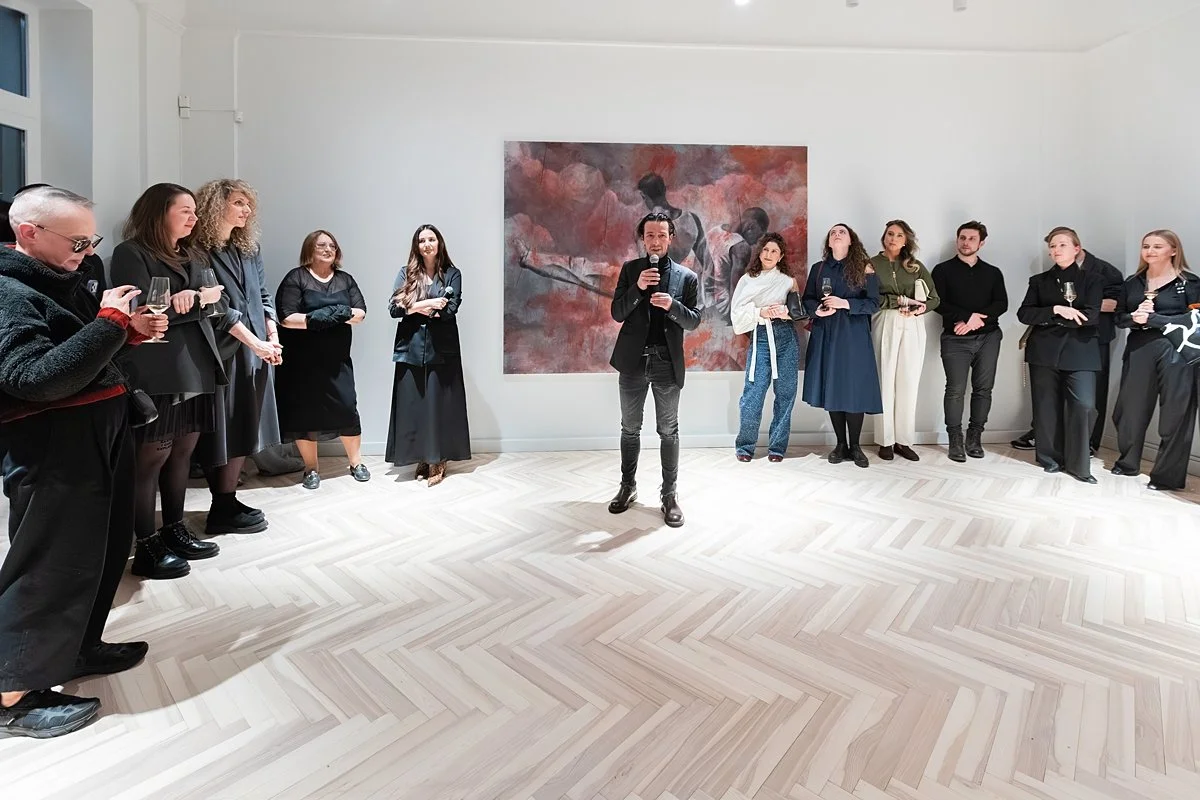
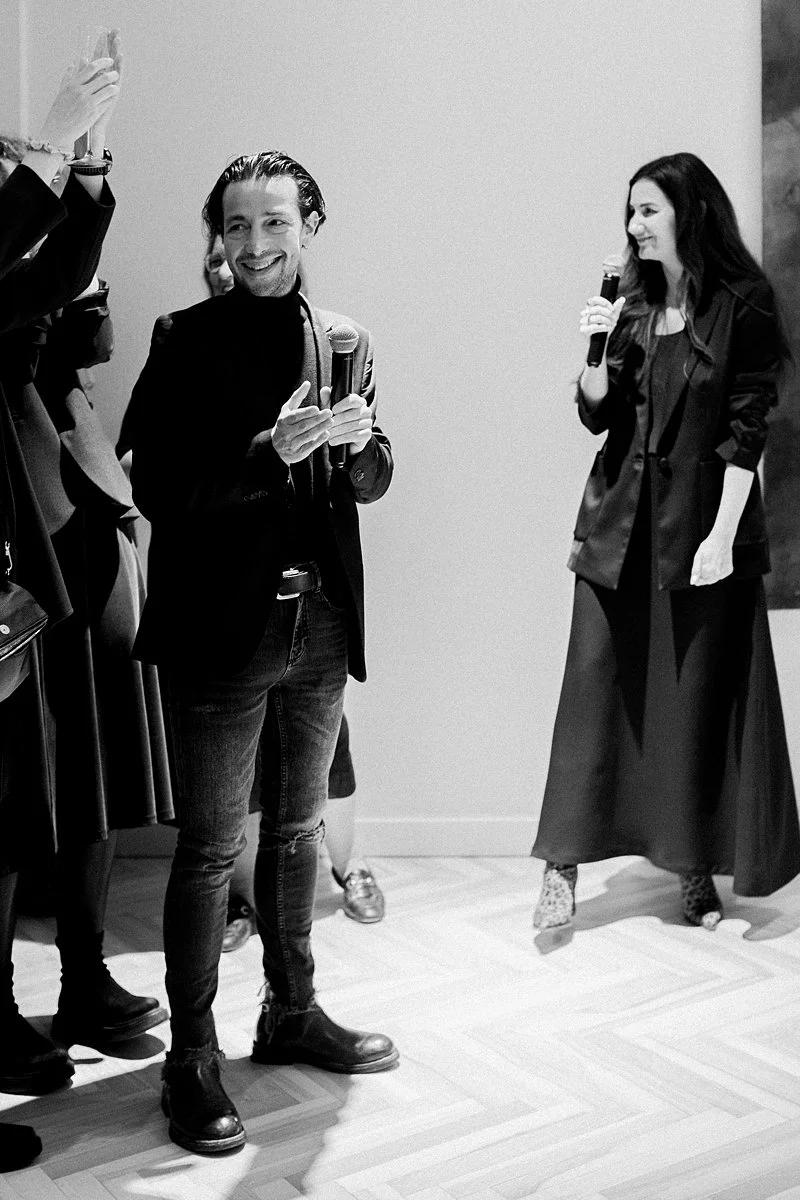
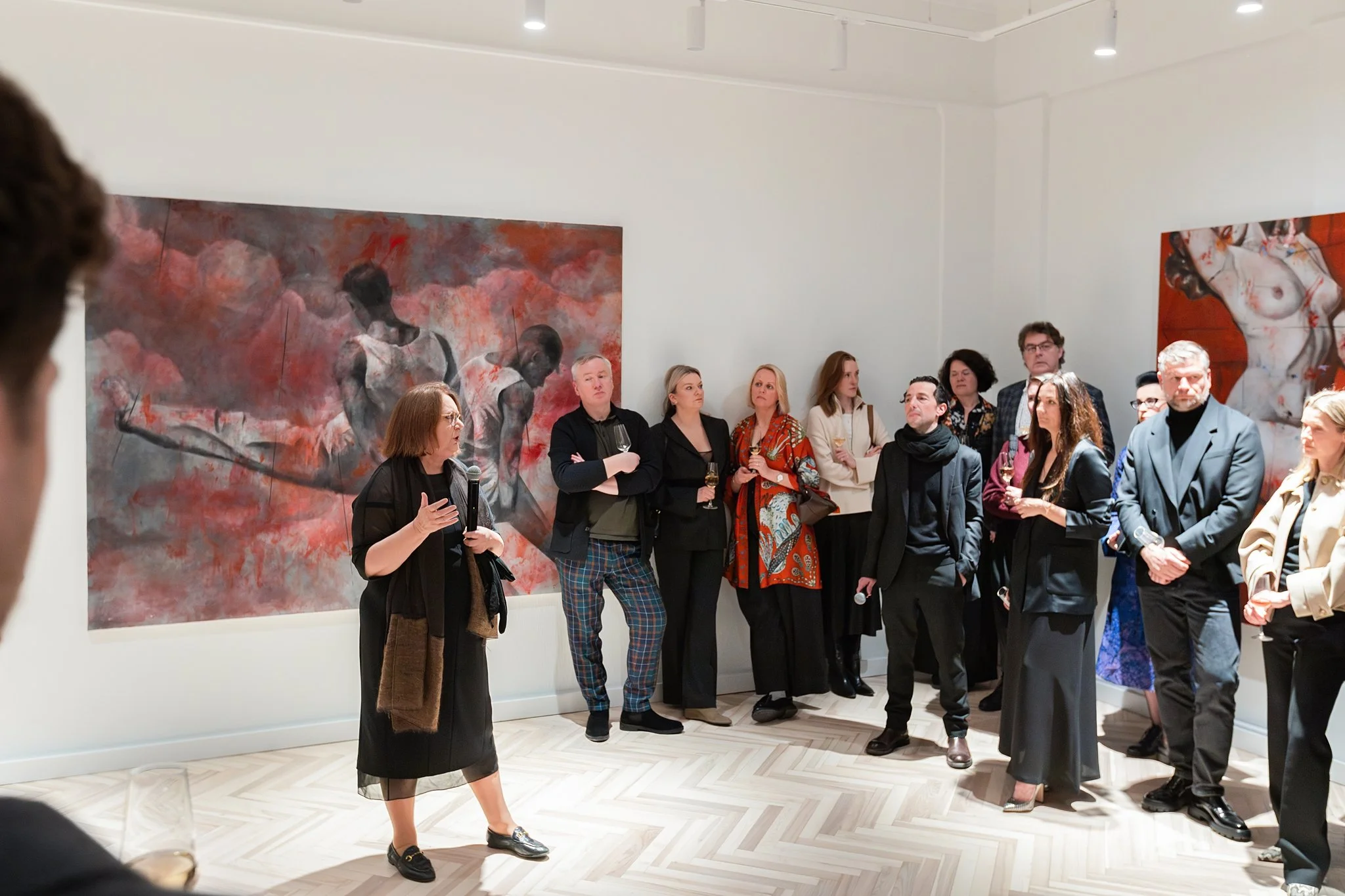
Grand Opening of INDOT Gallery | Victor Paukštelis - “Olimpija”
Curator prof. dr. Raminta Jurėnaitė
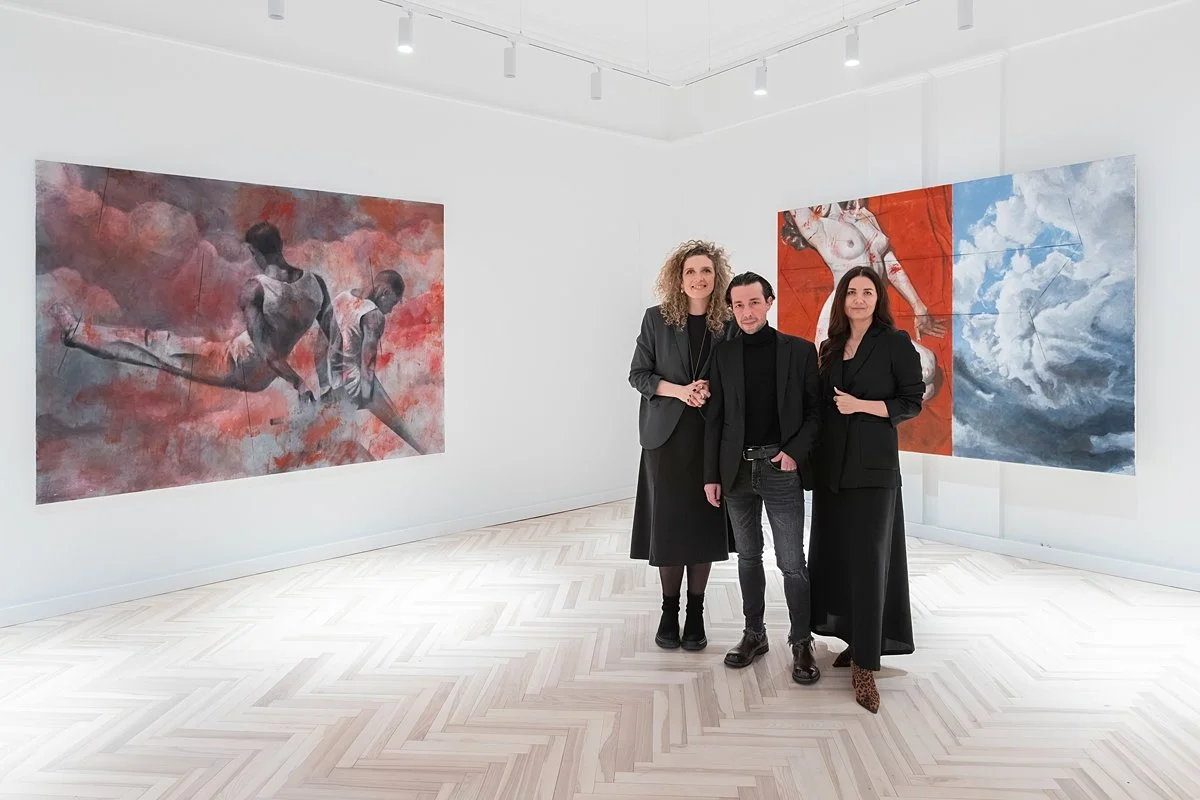
All of the paintings created by Viktoras Paukštelis in 2025 are united by the motif of the sky. Athletic sportsmen float in the air, while a cloudscape is juxtaposed against a red fabric background behind a nude figure of Marilyn Monroe. Eventually, people disappear altogether, and the gaze is directed solely at the sky itself. Each time this recurring motif is interpreted differently, evoking feelings of emptiness, longing, passion, and anxiety.
In Paukštelis’ paintings, an interest in art history and history intertwines with personal experience. As an avid marathon runner, he analyzes and interprets Leni Riefenstahl’s film chronicles of the Third Reich Olympics.
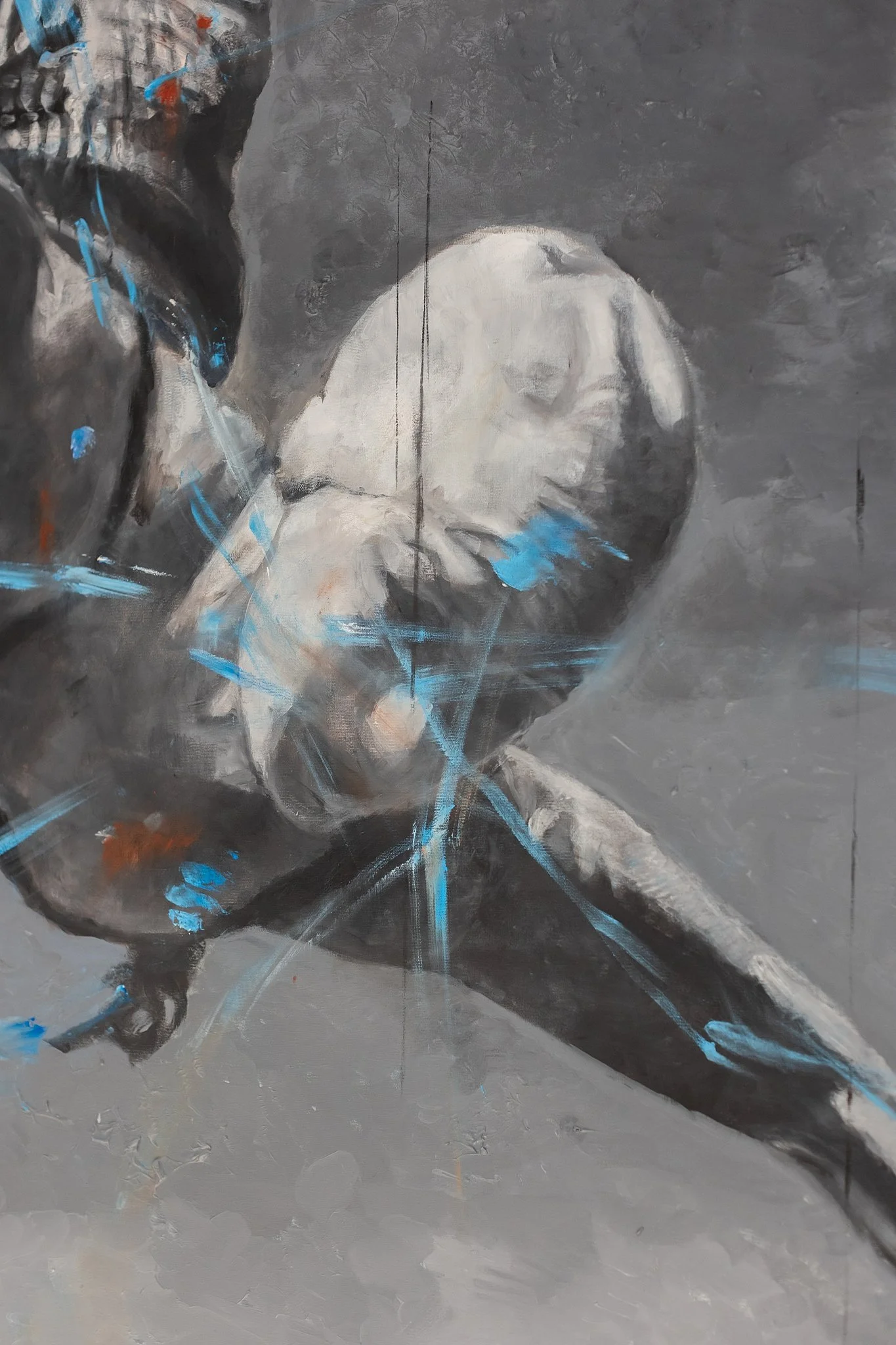
Victor Paukštelis painting ”Untitled III (after L.R.)”
In the painting “Untitled III (after L.R.)”, the artist is intrigued by the director and photographer’s ability to merge documentary realism with glorifying idealization. He focuses on a moment captured by Riefenstahl’s camera—a slow-motion dive into water—which intensifies the dramatic tension of the scene. The swimmer’s body glides through the air with astonishing momentum. At the same time, the restriction to a grey monochrome palette in the large-scale painting creates the impression of a fading photograph or a dimming screen. Subtle variations of grey tones and restless flashes of blue evoke a sense of transience and disappearance.
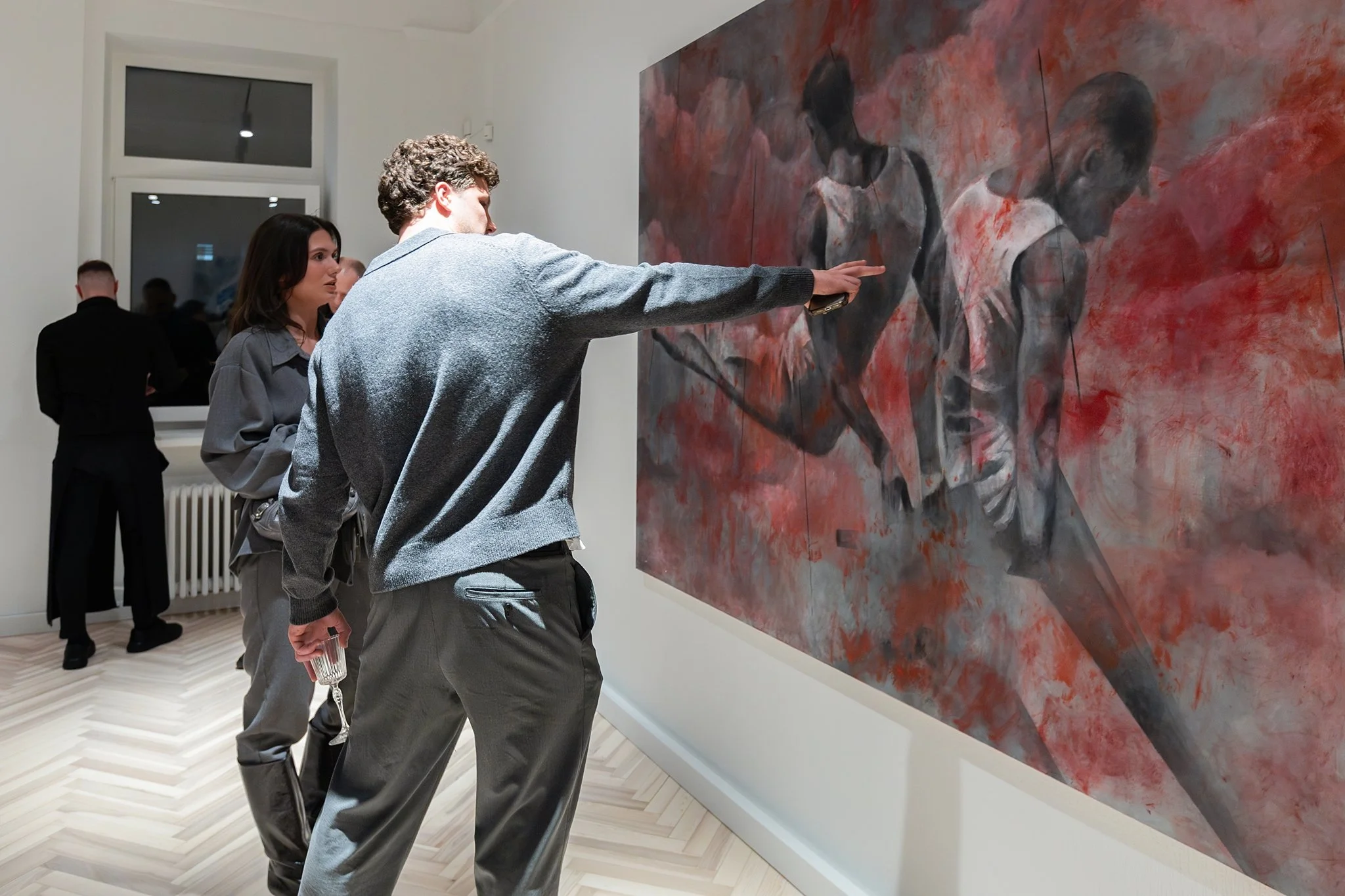
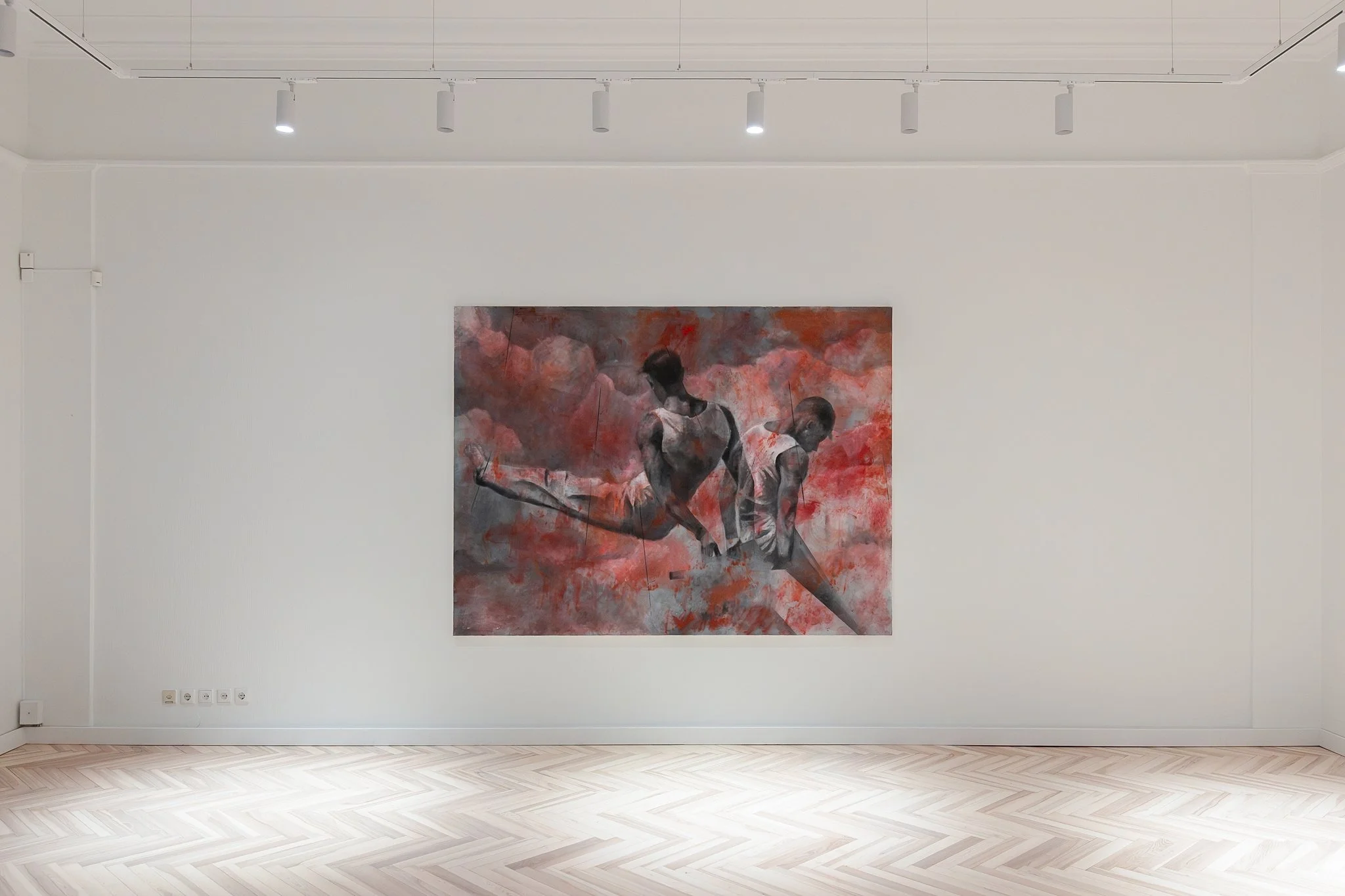
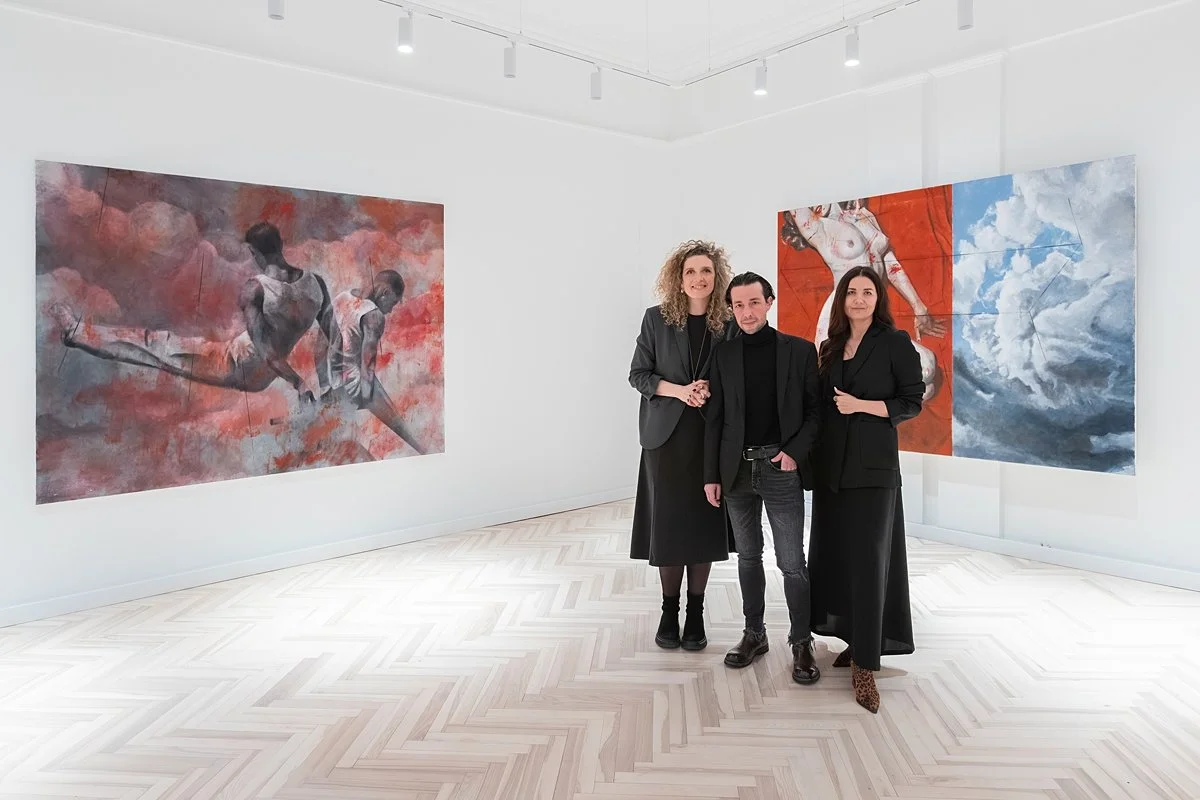
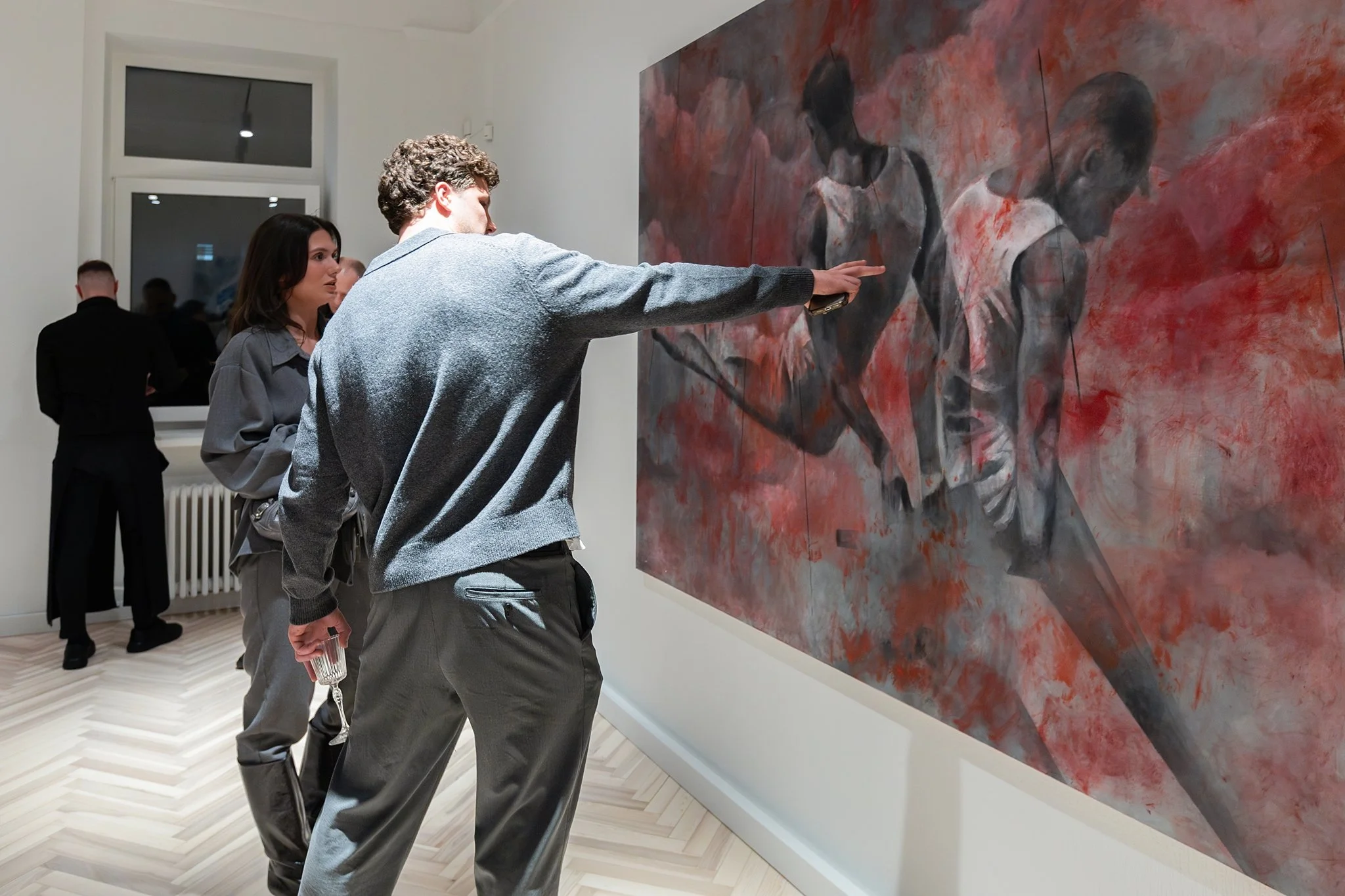
Victor Paukštelis painting “Purple Landscape with Two Figures”
The painting “Purple Landscape with Two Figures” is even more imbued with a strange melancholy. The gymnasts depicted up close appear large, strong, and their pale greyish bodies blend into the vastness of the sky without dissolving into it. The athletes turn away from one another—or perhaps they are mirror reflections of the same man. The mood of solitude is further intensified by the setting sun, which stains the clouds with purple hues. The dynamic movement of the clouds highlights the stillness of the athletes’ bodies. Viewing these works today is inseparable from knowledge of subsequent historical events—namely, Leni Riefenstahl’s ties to National Socialism. The breathtaking beauty of the athletes’ movements was followed by hell on earth.
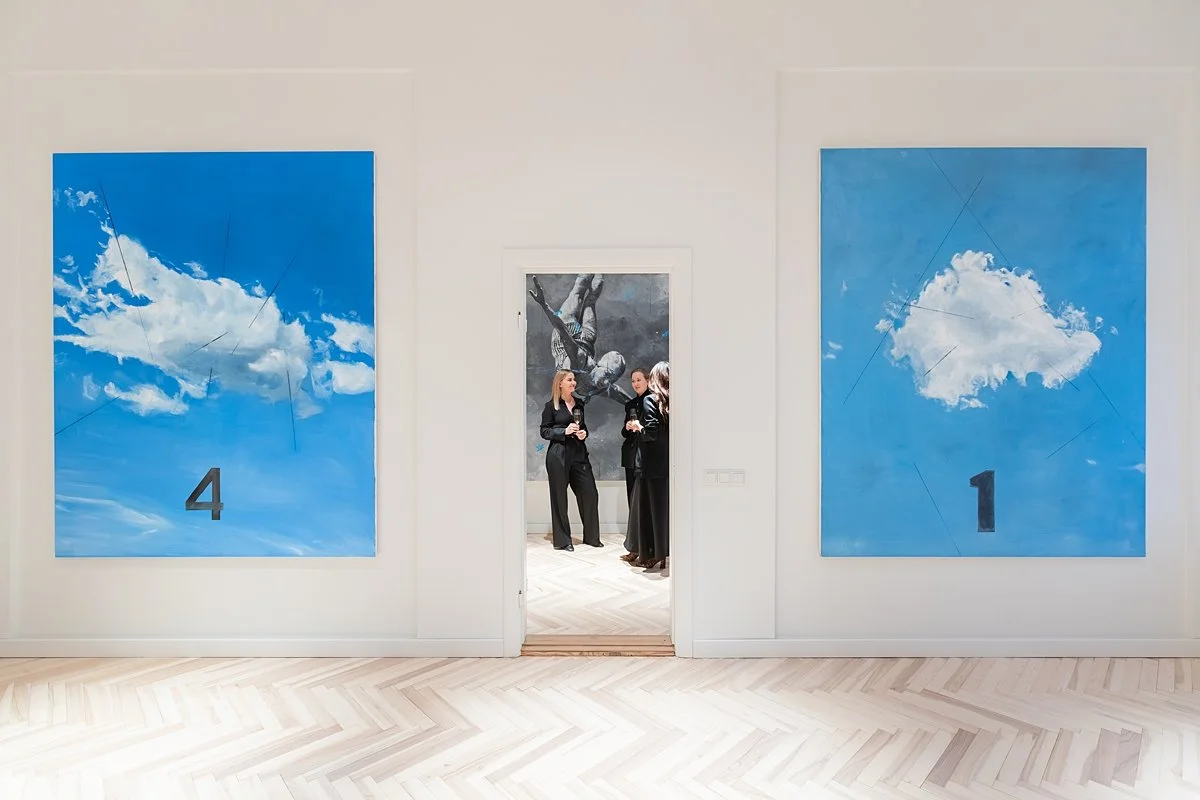
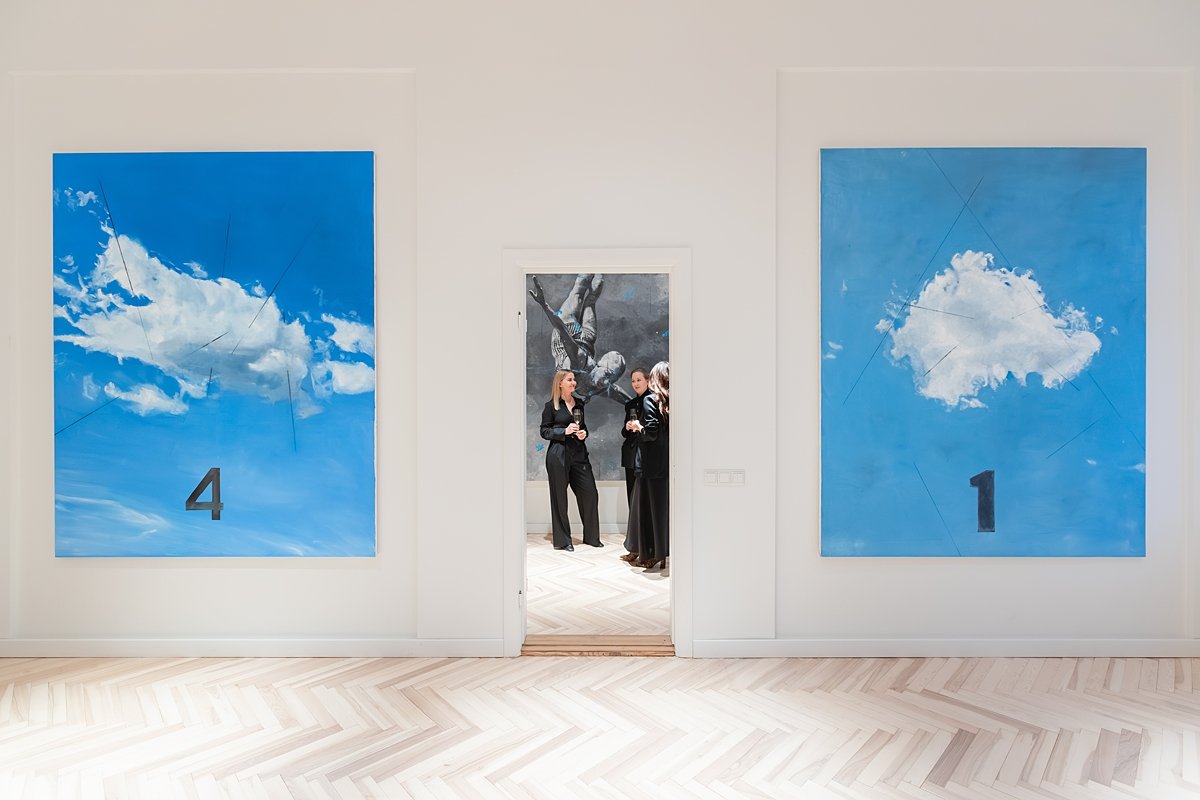
Victor Paukštelis painting “Wounded Cloud 4” | “Wounded Cloud 1”
This duality is also characteristic of Paukštelis’ cloud cycle. In the painting “Clouds I”, the artist creates a realistic, illusionistic image and conveys the atmosphere of a sky landscape. At first glance, it appears idyllic: a light, feathery white cloud drifts across a blue summer midday sky. However, this transparent calm is deceptive. The sky’s blue is cut through by several thin black lines, and at the bottom of the painting appears a stenciled black number “1,” similar to those used to mark fighter aircraft during World War II. By inserting just a couple of small, foreign elements, the artist introduces an unexpected subtext to the entire landscape. A sense of safety is lost; hidden danger becomes more insidious than overt aggression. In this series, one can also trace a relationship to Gerhard Richter’s paintings based on the same motif.
The sky serves as a reference to Olympus as the dwelling place of the gods, to the Olympics, and to Olympia.
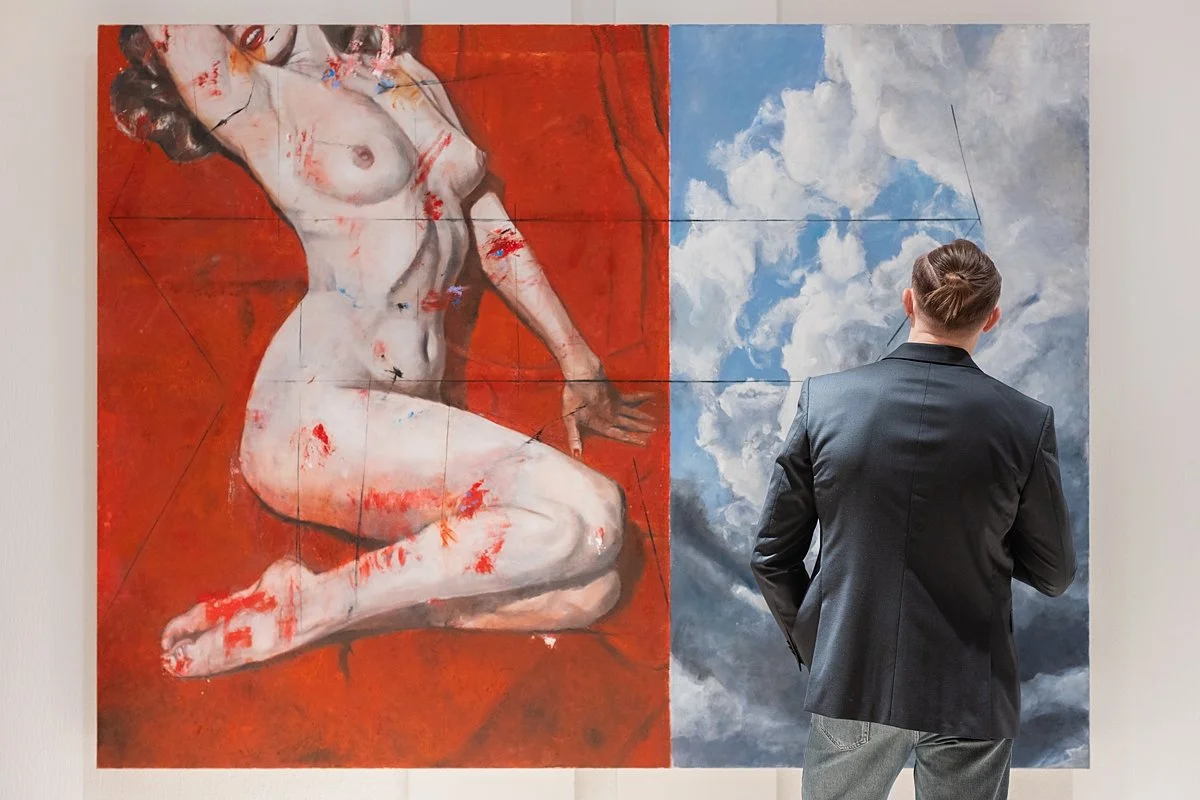
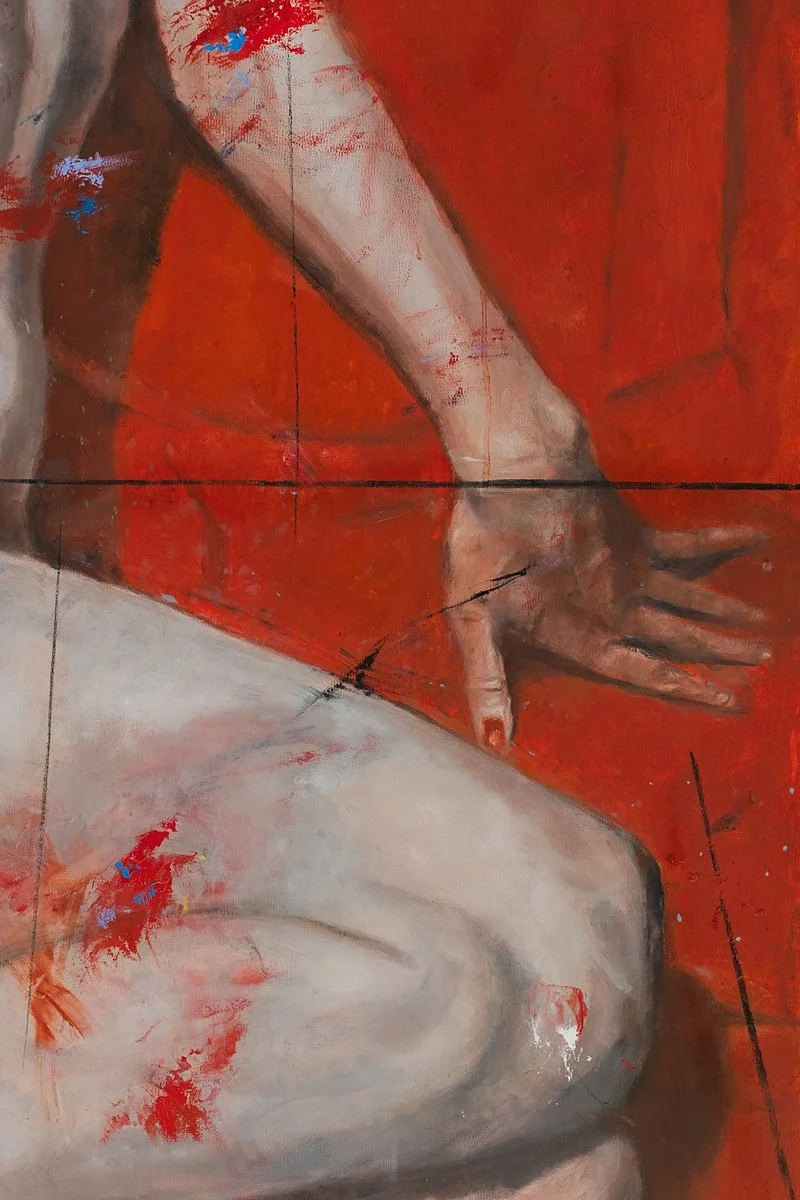
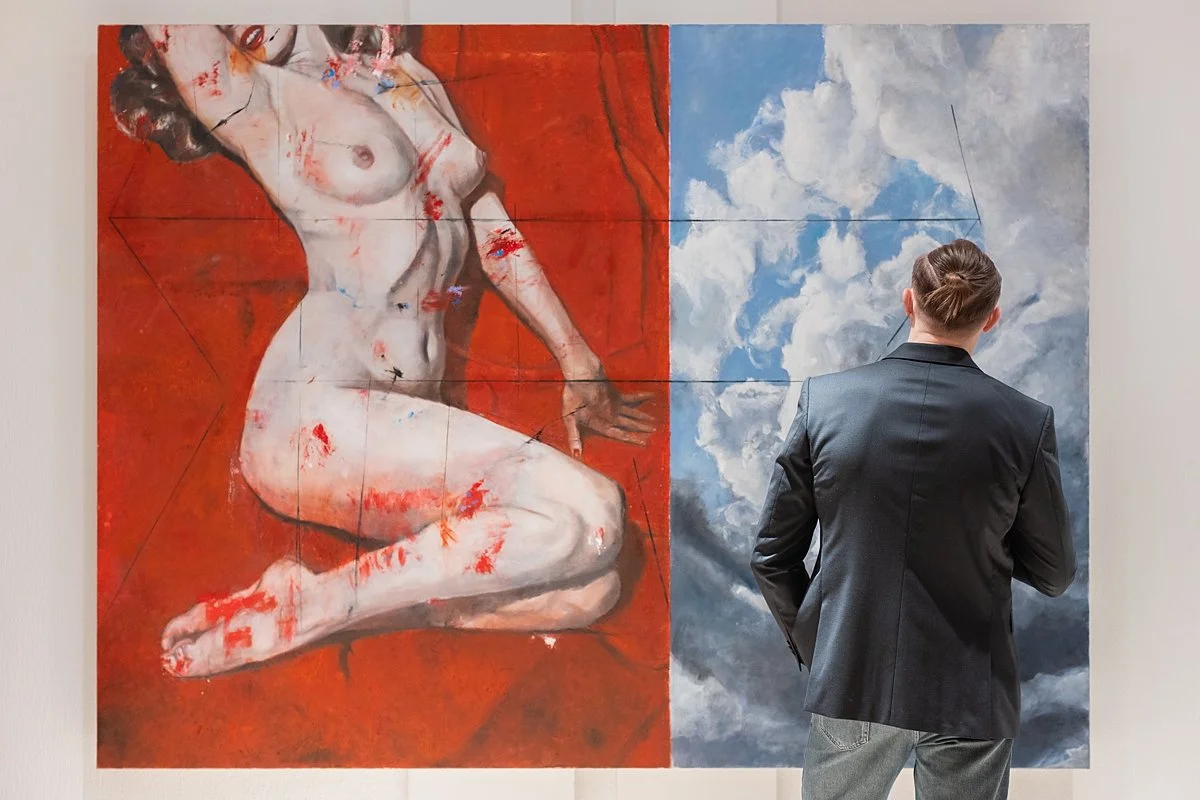
Victor Paukštelis painting “Olimpia (after T. Kelley)”
Paukštelis is drawn to the cultural multiplicity and ambiguity of themes and motifs. These qualities are also evident in his painting “Olympia (after T. Kelley)”. The starting point for this work was a nude photograph of Marilyn Monroe taken in 1949 by American Hollywood celebrity photographer Tom Kelley. According to Monroe’s recollections, she posed for a fee of 50 dollars at a time when she was struggling financially and even starving. The photograph was first published in a mass-produced calendar and became wildly popular. In it, the actress poses in a provocatively erotic position. Working from this photograph, the painter further intensifies its provocative nature. The vivid red fabric background accentuates the silhouette of the body while simultaneously creating a sense of vulnerability. Red reflections on the woman’s body evoke associations with bloody scratches. Yet above all, she remains a desired subject-object. As a contrast to this image, a realistic landscape of rain-laden clouds is symmetrically composed on the other side of the painting. This unusual iconography provokes a mixture of thoughts and emotions. By borrowing Kelley’s photographic reference, Paukštelis places it into a new context, extending the provocation of Édouard Manet’s painting “Olympia,” which broke away from the idealized tradition of the female nude. In these latest works, as in his earlier oeuvre, Paukštelis continues to balance between past and present, tradition and innovation.